How IKEA became my favorite tech company
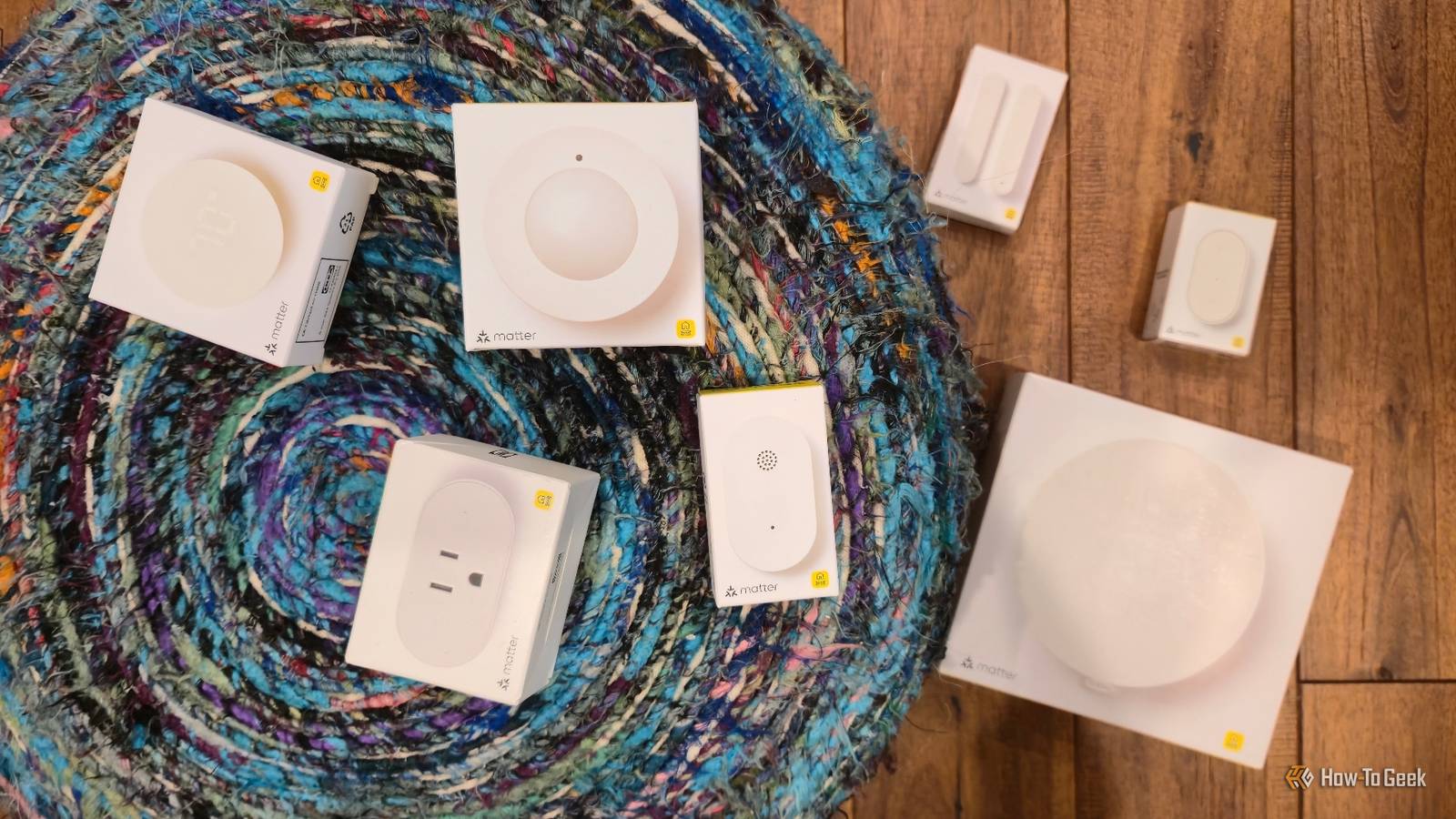
I cover many tech companies, with Samsung phones and accessories currently serving as my center of gravity, but there’s one brand primarily associated with furniture and home decor that has come out of nowhere to become the tech company I’m most interested in.
IKEA has released a new line of smart home products
2025 was the year I went from having zero interest in smart home tech to having the most teched out house I know. I bought 50 smart switches all at once. I installed a smart thermostat. My living room and bedroom now have lamps set to a schedule, which we can also control remotely via smart buttons.
All of this is thanks to the Matter standard, which means I can invest in all of this tech without selling my soul to a single company and praying that someone’s remote servers never shut down. Matter is an open standard, like Wi-Fi and Bluetooth, that connects various devices together and makes sure they speak the same language.
At the end of last year, IKEA released a new range of smart home products. This is hardly IKEA’s first foray into the world of tech products. The company has long offered a smart home hub and a line of gadgets that communicate using Zigbee, an older standard with different strengths. I’ve never had any interest in IoT devices dependent on bespoke apps, Z-wave, or Zigbee—but IKEA’s newest line is based entirely on Matter. IKEA hasn’t stuck a tepid toe into the water, either. It has gone all-in.
These are exactly the kind of Matter devices I want

Many companies add in Matter compatibility as an afterthought. They have their own existing app that they’d prefer you use, but they offer Matter as an extra perk. This isn’t inherently nefarious. After all, there is much that can’t be done over Matter just yet. The Govee app allows me to animate my floor lamps or even my Christmas lights. That app can also sync my lights to music. None of that can be done via Matter.
Some products advertise their Matter compatibility, but you can’t actually access a Matter pairing code until you first create an account, install their app, and generate a code there. I am particularly disgusted by that kind of hoodwink.
IKEA’s new products are purely Matter devices. They don’t require a special app for setup, nor is functionality locked behind a bespoke companion app. This doesn’t mean they always work well. People are encountering issues with IKEA’s BILRESA scroll wheel in particular, which functions wildly differently depending on your smart home platform—if it functions at all. But I’m particularly happy to see a company design an ecosystem of products around what Matter can already do today.
The prices couldn’t be better
I recently reviewed the Flic Duo, which is a wireless smart button that you can map to whichever smart devices or automations you want. When people hear smart home, they often think apps and voice assistants, yet it’s buttons like this that strike many as the most impressive. Not everyone wants to talk to a voice assistant that’s always listening, but many would love to have a button on their coffee table that turns on the ceiling fan.
The problem with the Flic Duo is its price. I was thoroughly impressed with the product, but $60 is a tough sell for what is ultimately just a button. While it can do many impressive things, I just want a button on my desk that controls a few portable lights. $60 is a lot to pay for that.
IKEA’s BILRESA dual button remote performs the same task, and it only costs $6. I can place BILRESA remotes all throughout the house for the price of one Flic Duo. The same is true of the IKEA TIMMERFLOTTE, a temperature and humidity sensor that, at $10, is affordable enough for me to gradually place in every room where I might want one.

You could say the same about the IKEA KLIPPBOK water sensor and IKEA MYGGBETT contact sensor. Yes, at $10 each, putting one near every appliance that might leak or window that can open eventually adds up to hundreds of dollars, but that’s a whole lot better than costing thousands. And we haven’t even gotten to various accessories like IKEA’s $4 20W USB-C charger.
I’ve already bought much of IKEA’s product line, and I’ll be gradually getting more throughout the year. If 2025 was the year I put smart switches all throughout my home, 2026 is looking like the year of IKEA smart buttons and sensors. And to think, converting my home into a smart one costs around the same as an iPhone Pro Max and much less than a beefy gaming PC. What times we live in.
link