David Fischel: Surgical Robotics for Superhuman and Remote Operations

Jonathan D. Grinstein, PhD, North American Editor of Inside Precision Medicine, hosts a new series called Behind the Breakthroughs that features the people shaping the future of medicine. With each episode, Jonathan gives listeners access to his guests’ motivational tales and visions for this emerging, game-changing field.

When most people hear “precision medicine,” they think of molecular diagnostics, gene editing, and cell therapy—not surgery. But precision medicine doesn’t end at genomes and cells. Those molecular changes shape tissues, organs, and ultimately the anatomy a physician must treat. Genetic diseases don’t only appear under powerful microscopes; many alter the body in ways you can see.
And while gene editing holds enormous promise, it won’t solve everything—not technically, practically, or ethically. Around the world, surgeries and other disease-modifying treatments will remain essential long after genetic medicines take root in affluent health systems. Precision care for patients with conditions like congenital heart disease still depends on understanding how genetic variation reshapes heart structure and function and how those macroscopic changes should direct treatment.
That’s where the vision of Stereotaxis CEO David Fischel comes in. The future of surgery, he imagines, looks less like a bustling operating room and more like a pilot guiding a mission from a cockpit. Here, the surgeon never touches the patient. Instead, they steer a catheter tip on a screen with sub-millimeter precision, using magnetic fields that act like “invisible fingers.”
Stereotaxis, based in St. Louis, has spent more than two decades developing robotic systems for navigating the body’s most delicate vessels. Its magnetically steered, ultra-soft catheters move through intricate anatomy with stability and accuracy human hands can’t match. After treating roughly 170,000 patients—mostly for cardiac arrhythmias—the company has transformed procedures once performed in lead aprons into ones guided from an immersive robotic cockpit.
This episode explores that frontier where genomics meets anatomy—and where surgery becomes precision navigation.
This interview has been edited for length and clarity.
IPM: How does surgical robotics benefit patients?
Fischel: If you think about the challenge in a typical end of vascular procedure, a physician inserts a catheter, usually radial access in an arm or femoral access in the legs, and then they’re snaking the catheter to the blood vessels. The blood vessels are a type of superhighway to get wherever you need to deliver therapy or to diagnose something. The challenge is that if a catheter is perfectly rigid like a pen, what I do at the proximal end will translate perfectly to what happens at the distal end. If I move my hand one centimeter forward, the tip of the catheter will also move one centimeter forward. I turn my hand 90 degrees; the tip will turn 90 degrees. But if you move a pen from your leg to your heart, you’re going to cause a lot of trauma that’s not going to be healthy for the patient. If you instead use a very flimsy catheter or device and move it through the blood vessels, it may seem safe and non-traumatic, but the issue is that any actions taken in this area will affect the teat. There’ll be no translation.
So, a catheter is a balancing act. The more rigid it is, the more control you can transfer, and the more likely you are to cause perforations, vessel dissections, or other trauma. It’s never perfect. Often, the translation from the handle to the zip occurs through the rigidity of the plastic and a small wire known as a pull wire, which functions similarly to a puppet wire. A physician standing at the patient’s leg, holding the handle of the catheter, will want to move the tip; they will push forward, then rotate the catheter, pull a small lever, and hook the catheter. The catheter is designed to perform only one type of hook. They’ll try to remove things, but it’s not a one-to-one translation. You might clock your hand 90 degrees, and the catheter clocks 50 degrees, or it clocks 150 degrees. There are all sorts of translational errors.
What we did instead was take a catheter, and we made a few modifications to it. We make the plastic very soft and flimsy, like a piece of cooked spaghetti, to be atraumatic and extremely safe. They create a uniform magnetic field where the patient is. That uniform magnetic field has no attractive or repulsive forces. By adjusting the orientation and tilt of these magnets, you create an artificial north pole in 3D space. So, for some people, the catheter resembles a compass needle that seeks to align itself perfectly and move smoothly along the artificial north pole. Now a physician who’s seated behind a computer can say, “I want to move the catheter here and there,” and we know how to adjust the magnetic fields accordingly so the catheter is being moved.
You can imagine these magnetic fields are like these invisible fingers that give a surgeon direct control over the distal tip of the catheter. You now have a level of precision in the movement of the tip that is sub-millimeter. You can hold the tip perfectly steady in 3D space. It is a very, very soft, traumatic catheter. The catheter cannot be pushed into the tissue, as it will buckle. It will perforate. You can do bends, twists, and turns. For example, regarding the congenital heart patients I mentioned earlier, you can use a catheter that typically allows for only one bend. You can manipulate it to create multiple bends, similar to a pretzel shape. This technique helps you access areas that would otherwise be difficult or impossible to reach. That’s our core mechanism of action. The value proposition is to treat patients that otherwise wouldn’t be good candidates for therapy that wouldn’t be able to be treated minimally.
IPM: What is required for surgical robotics to integrate into healthcare?
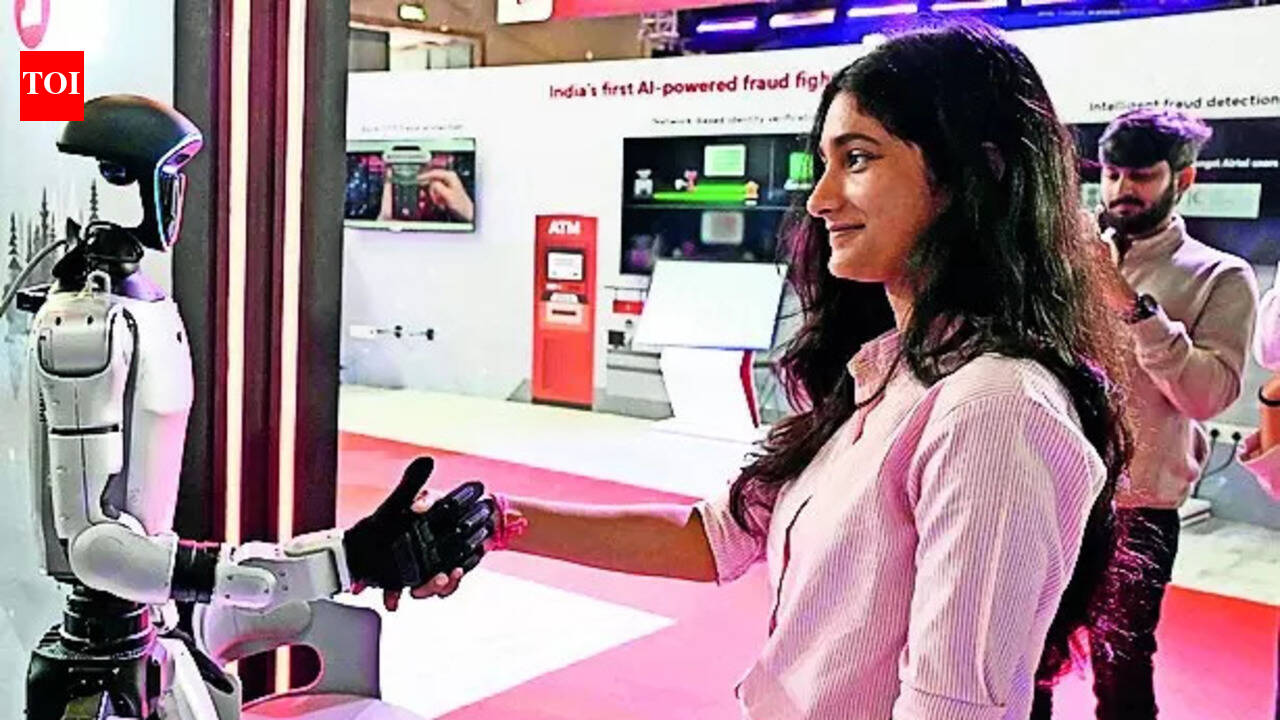
Fischel: The procedure is being executed through a computer interface. This technology allows procedures to be performed that exceed the capabilities of the human hand. That’s generally how I would define robotic surgery, or a robot. It enables us to perform tasks that are beyond the capabilities of a human alone. We’re putting the physician behind a computer and now they can move catheters in ways that they wouldn’t be able to with their hands.
There are certain surgeries, such as specific ablation procedures, where it is crucial to maintain extreme steadiness during the procedure. When you’re treating a heart arrhythmia, you move a catheter into the heart chambers, and you want to burn some of the misbehaving cells. Sometimes you have to burn an area of tissue that is right by the very AV node. You burn the AV node; the patient has to have a pacemaker the rest of their life. So you’re burning at a very, very delicate spot. The physician will essentially release the mouse. They don’t even move; they just remain in place. They appear to be in the correct position. They’re looking at the electrograms. They’re seeing everything else. They say, “Yeah, I’m in the right place.” They don’t want to click anything while asking this question, so they don’t touch the mouse. The catheter will just stay steady. There’s no command for the robot to change anything. It’ll stay where it is. It’s not just the stress of wondering what to do.
Sometimes they know what to do, but imagine that you’re in eight hours of surgery. You’re standing on your feet the whole time. You’re wearing a 25 pound lead vest to protect yourself against the radiation for your legs. At some point, you’re going to be tired. At some point, experiencing tiredness and maintaining your body in a specific position will serve as one of the best examples. In my role, I need to learn how physicians use our system, what works well, what doesn’t, what impacts their decision-making, and how we can improve the technology.
One of the most enjoyable early visits I had was when I first started at Stereotaxis, during which I visited many hospitals and observed various surgeons. I have a physician in Europe who said, “I have great hands and I can move a catheter however I want with my hands. My hands are really good. But I love using the robot because it opens up my mind. When I first used the robot, I felt a part of my brain opening up to just thinking about the procedure. At the end of the day, a physician is not just an executor of actions. There is a patient with the disease that they are treating. they have to understand why the patient has a disease and how to treat it. You want them to focus on this cognitive skill set, dedicating as much attention as possible to the cognitive aspects of their profession.
IPM: What is the international reach and accessibility of surgical robotics?
Fischel: We have about 100 hospitals around the world, of which just over half are in the U.S. We have a significant presence in Europe, and we also have a smaller number of hospitals in Asia. When you consider the hospitals that use our services, it is interesting to note that, despite our small size, one might expect that only large university hospitals would be involved. There are many like that. But then we have many kinds of community hospitals in a random towns in Idaho or Texas. Here in St. Louis, we’re both at Barnes Jewish Hospital, which is the university hospital of Washington University. We’re also at Missouri Baptist, which is a community hospital.
Our model involves providing robots to hospitals, supporting their programs, and offering both clinical and technology support to ensure the success of their robotic programs, while the hospitals manage all other aspects. One particularly interesting aspect is that an electrophysiologist, a specialist within the field of interventional cardiology who studies the heart’s electrical systems, uses our robot.
There’s someone in Georgia who’s originally from Africa. He collaborated with us on an innovative idea. We’ve been brainstorming and thinking that you, with our newer robots and some of the newer technology, can place a robot on a mobile cath lab—a truck equipped with a cath lab inside. Because it is a robot, you can control it from a distance of 10 feet or even from 10 miles away. We have demonstrated the system’s low latency, and there have been several dozen long-distance robotic procedures using our system, primarily conducted during conferences, which document the ability to perform long-distance surgery with a robot.
In most of Africa, there is essentially no access to electrophysiology services. So, you could start to see it. Most procedures in the Western world are primarily performed for the aging population. Young people can also experience arrhythmias. There are many types of arrhythmias that, if treated, can be managed relatively simply, but patients will need ongoing treatment for the rest of their lives. If you don’t treat arrhythmias, you are likely to experience many other health issues throughout your life.
You could envision a model where a mobile truck is moved from the parking lot of Hospital A to Hospital B in an underserved community in the U.S. This concept could also be valuable in specific underserved regions of the U.S. Generally underserved regions could benefit greatly from this idea. Additionally, there is often some medical expertise available. Many people are capable of inserting catheters and providing patient care. But the specialist who can treat the patient may be 10,000 miles away, and that’s okay. They can observe their unique expertise across longer distances. That’s probably the most intriguing thing. However, that is unlikely to sustain our business over the next five to ten years. We aim to conduct initial demonstrations over the next couple of years, either in the U.S. or elsewhere.
IPM: How can remote surgical robotics improve healthcare?
Fischel: We have a case for the use of telemedicine with our current system. In Europe, this technology has primarily been utilized in conferences and controlled settings. However, there are two examples where telemedicine was used outside of those controlled settings. One example occurred during COVID when physicians who were suddenly ill and at home needed to collaborate with their local team to support colleagues who were with the patient.
On another occasion, while the chief of the department was at home in Europe, a younger patient with a very severe ventricular arrhythmia emerged, and the patient was essentially on the edge of death if not treated urgently. Local physicians were also performing the procedure there, but they encountered difficulties. For him to get to the hospital, it would have taken long to treat that patient. He also remotely did the procedure from home, helping the local physicians. There are several early examples where remote procedures can genuinely benefit patients. This practice is not merely for entertainment purposes. It provides real value.
link